
Fernunson Dental
Translucent Porcelain Veneers Enamel Conserving Guide
Learn how translucent porcelain veneers enamel conserving treatments can restore your smile while preserving natural teeth.
August 16, 2026
When planning a smile makeover, choosing translucent porcelain veneers enamel conserving techniques can provide a natural-looking, beautiful result while protecting your healthy tooth structure. Modern cosmetic dentistry has shifted away from aggressive tooth reduction, focusing instead on conservative restorations that mimic natural dental anatomy [3][6]. Whether you are looking to fix minor chips, close gaps, or brighten stained teeth, understanding how today's dental materials protect your natural enamel can help you make an informed decision about your care.
In this guide, we will explore the differences between translucent porcelain veneers and cosmetic bonding, the crucial role enamel plays in dental restorations, and what you can expect during the treatment process.
---
Why Choose Translucent Porcelain Veneers Enamel Conserving Procedures?
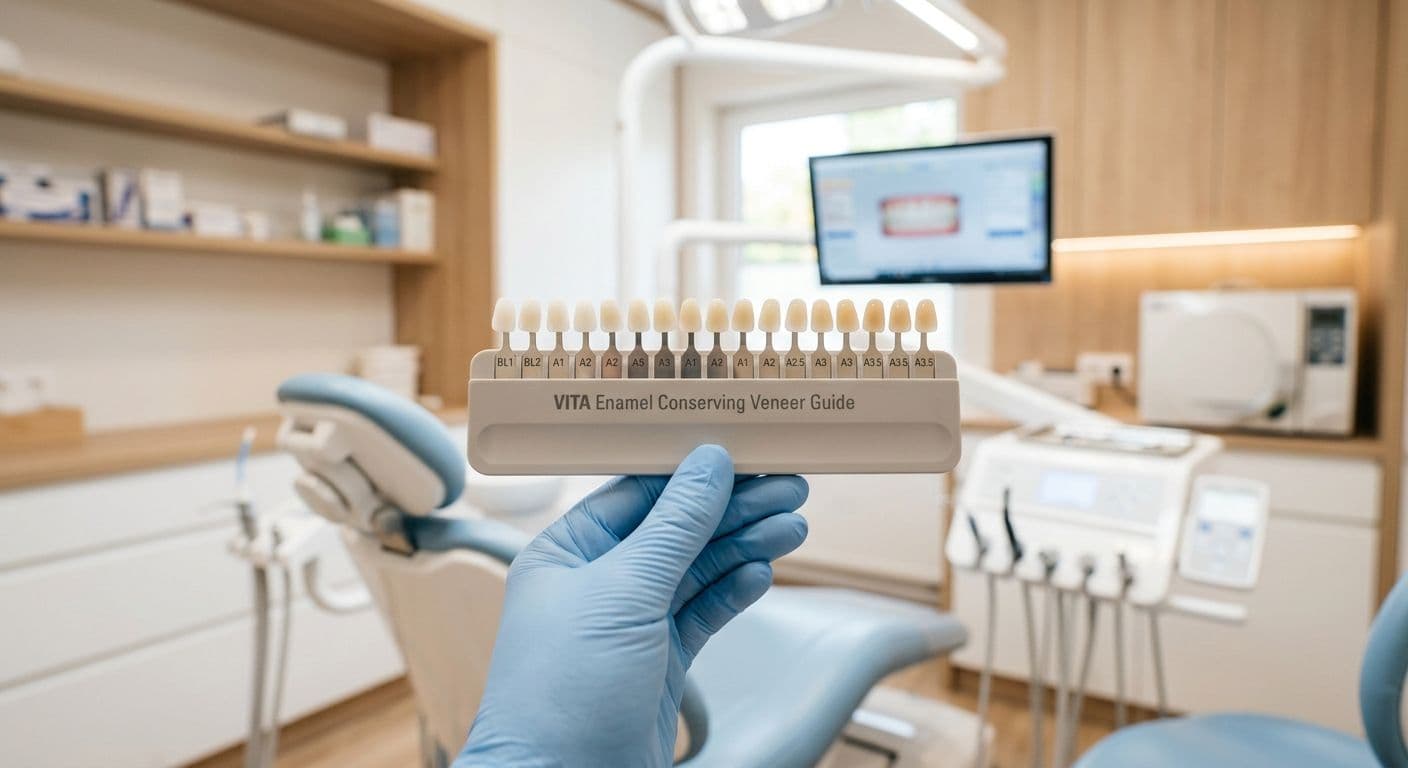
A porcelain veneer is a custom-made, ultra-thin shell of dental ceramic designed to cover the front surface of a tooth [1]. In advanced cosmetic dentistry, "enamel porcelain" is strategically applied to the outer layers of the veneer [1]. This specific type of ceramic replicates the natural optical properties of human teeth, allowing light to pass through and reflect off the underlying structure just as it would on a natural tooth [1].
Using a translucent porcelain veneers enamel conserving approach offers several key advantages:
- Natural Esthetics: The translucency of the porcelain prevents the tooth from looking artificially opaque or "chalky" [1].
- Maximum Tooth Preservation: Traditional veneers often required significant tooth preparation. Today, additive contour techniques allow dentists to reshape and restore aging or damaged teeth while preserving as much of the original, healthy enamel as possible [6].
- Exceptional Durability: Porcelain is highly resilient and behaves like natural tooth enamel, restoring both the beauty and the structural integrity of your teeth [6][8].
---
Understanding Porcelain Veneers vs. Cosmetic Bonding
If you are looking to enhance your smile, you will likely compare porcelain veneers with cosmetic bonding. Both are excellent restorative options, but they differ significantly in materials, longevity, and how they interact with your natural teeth.
Cosmetic Bonding
Teeth bonding involves applying a tooth-colored composite resin directly to your teeth to correct imperfections such as chips, gaps, or discoloration [4].
- Conservative Nature: Bonding is highly conservative because it usually preserves the natural tooth structure without requiring enamel removal [2].
- Convenience: It is typically completed in a single dental visit [4].
- Stain Resistance: While composite resin is highly aesthetic, the material is only "somewhat stain-resistant" and can discolor over time [5][8].
Porcelain Veneers
Porcelain veneers are stronger and more durable than composite resin bonding [8].
- Stain Resistance: Unlike bonding, high-quality dental porcelain does not change color or stain over time [8].
- Preparation Requirements: Traditional porcelain veneers require the removal of a thin layer of enamel, making the procedure irreversible [2]. However, modern enamel-conserving techniques minimize this removal, keeping the preparation strictly within the strong enamel layer [6].
- Timeline: Preparing and placing porcelain veneers generally takes at least two dental visits to allow for custom laboratory fabrication [8].
---
The Critical Role of Enamel in Dental Bonding
Enamel is the hard, protective outer layer of your teeth, and preserving it is essential for the longevity of your cosmetic restorations [6].
When a dentist places a porcelain veneer, they rely on a process called micromechanical bonding to secure the ceramic to the tooth. A strong, long-term cement bond relies heavily on having sufficient enamel [7]. If a tooth is prepared too aggressively, exposing the softer dentin layer underneath, the bond strength decreases significantly [7].
For this reason, insufficient enamel is one of the primary contraindications for porcelain veneers [7]. Other contraindications include extreme tooth crowding, which must be corrected before veneers can be successfully placed [7].
In the dental world, finding a reliable practitioner to evaluate your enamel is just as important as finding a secure SLOT ONLINE TERPERCAYA platform for online recreation; trust, precision, and quality are paramount to ensuring a safe and successful outcome.
---
What to Expect During Your Smile Restoration
Undergoing a cosmetic dental procedure is a collaborative process. Here is what you can expect during your treatment journey:
1. The Consultation and Evaluation
Your dentist will perform a comprehensive examination to assess your oral health, evaluate the thickness of your remaining enamel, and discuss your aesthetic goals [7].
2. The Preparation Phase
- For enamel-conserving veneers, the dentist will gently prepare the teeth, removing only a microscopic layer of enamel (often less than 0.5 mm) to ensure the veneer sits flush with your gumline [2][6].
- For cosmetic bonding, the dentist will simply clean the tooth and apply a gentle conditioning liquid to help the composite resin adhere [4].
3. Fabrication and Placement
If you are receiving porcelain veneers, impressions of your teeth will be sent to a dental laboratory [8]. While waiting in the reception area or during the short period between dental visits as your custom porcelain is fabricated, you might find yourself browsing the web, catching up on the news, or checking the latest LIVE DRAW SGP results on your phone. Once your custom veneers are ready, your dentist will carefully bond them to your teeth, instantly transforming your smile [8].
---
Conclusion
Choosing between translucent porcelain veneers and cosmetic bonding depends on your budget, aesthetic goals, and the structural condition of your teeth [2][8]. By prioritizing enamel-conserving techniques, you can enjoy a radiant, long-lasting smile while keeping your natural teeth strong and healthy [6].
If you are ready to explore how cosmetic dentistry can enhance your smile, schedule a consultation with a qualified cosmetic dentist today to discuss a personalized treatment plan.
---
Sources
[1] Porcelain Veneer - an overview — https://www.sciencedirect.com/topics/engineering/porcelain-veneer [2] Porcelain Veneers vs. Cosmetic Bonding: Your Guide (20 May 2026) — https://dentistryinredfern.com/porcelain-veneers-vs-cosmetic-bonding/ [3] Advances in dental veneers: materials, applications, and ... — https://pmc.ncbi.nlm.nih.gov/articles/PMC3652364/ [4] Teeth Bonding vs Veneers Pros and Cons: What You Need ... (20 Feb 2025) — https://platinumdentalstudio.com.au/teeth-bonding-vs-veneers-pros-and-cons-what-you-need-to-know/ [5] Bonding vs. Veneers vs. Lumineers (7 May 2026) — https://www.bellflowerdentalgroup.com/dentistry-blog/compare-porcelain-veneers-to-no-prep-lumineers-in-bellflower-ca/?undefined= [6] Enamel Preservation in Porcelain Veneers | PDF — https://www.scribd.com/document/276503949/Additive-Contour-of-Porcelain-Veneers-a-Key-Element-in-Enamel-Preservation [7] 12. Porcelain Veneers: An Esthetic Therapeutic Alternative (4 Jan 2015) — https://pocketdentistry.com/12-porcelain-veneers-an-esthetic-therapeutic-alternative/ [8] Bonding and Veneers — https://www.cda-adc.ca/en/oralhealth/procedures/bondingveneers/