
Fernunson Dental
How to Spot Avoid Online Oral Health Misinformation
Learn how to spot avoid online oral health misinformation. Protect your teeth from dangerous DIY trends and find science-backed dental facts.
August 21, 2026
To protect your smile, you must learn how to spot avoid online oral health misinformation before trying any viral dental trends. From DIY teeth whitening hacks to natural remedies that promise to cure cavities overnight, the internet is flooded with dental advice. While some of these tips are harmless, many are misleading, scientifically inaccurate, and potentially dangerous to your teeth and gums [4][8].
As social media platforms continue to influence our daily habits, understanding how to evaluate dental claims online is crucial for maintaining a healthy preventive dentistry routine.
---
The Rise of Dental Myths on Social Media
Misunderstandings about oral health are on the rise [4]. Platforms like TikTok, Instagram, and YouTube have made it easier than ever for unverified advice to reach millions of users, directly challenging evidence-based dental care [7].
Several common myths have gained significant traction online:
- Activated Charcoal Brushing: Many influencers promote activated charcoal powder as a natural teeth whitening miracle. However, dental professionals warn about its severe limitations and abrasiveness, which can permanently wear down your protective tooth enamel [4].
- Ignoring "Baby Teeth" Health: A widespread myth suggests that primary (baby) teeth do not require diligent care because they eventually fall out. In reality, early childhood decay can severely impact permanent tooth development and overall jaw health [4].
- DIY Orthodontics: Some creators suggest using hairbands or household items to close gaps between teeth, a highly dangerous practice that can lead to tooth loss.
Because online content can easily be misleading and harmful, consumers must learn to look at viral trends with a critical eye [8].
---
Why You Must Spot Avoid Online Oral Health Risks
Understanding how to spot avoid online oral health scams and myths is vital because the consequences of bad dental advice are often irreversible. Unlike a bad haircut, damaged tooth enamel cannot grow back. Relying on unverified social media hacks for your teeth is like betting your dental health on a random SLOT TERPERCAYA game—it is a gamble with incredibly high stakes that you are likely to lose.
In the scientific community, researchers are actively studying how online oral health misinformation spreads. Qualitative studies analyzing English-language websites have sought to characterize the sheer volume of misinformation available to the public [2]. Furthermore, dental experts emphasize the importance of distinguishing between actual malicious misinformation and general poor information quality [5]. Whether a post is intentionally deceptive or simply poorly researched, acting on it can result in severe tooth sensitivity, chemical burns on your gums, or deep infections.
---
Key Warning Signs of Oral Health Misinformation
Identifying unreliable dental advice becomes much easier when you know what red flags to look for. Keep these warning signs in mind as you browse your feeds:
1. The "Miracle Quick Fix"
Real oral care—whether it is reversing early-stage gum disease, whitening teeth safely, or treating a cavity—requires time, consistent hygiene habits, and professional guidance. If a post promises instant, miraculous results from a single household ingredient, it is likely false. Just as people look for instant, real-time updates on a LIVE DRAW TERKINI platform, social media users often crave immediate results for their teeth, but proper oral hygiene requires consistent, science-backed habits rather than instant miracles.
2. Lack of Professional Credentials
Always check who is sharing the advice. Is the creator a licensed dentist, a registered dental hygienist, or simply an influencer looking for views? Be highly skeptical of clinical claims made by creators who lack formal medical or dental training [6].
3. Sensationalist and Fear-Based Language
Articles or videos that use scare tactics—such as claiming that standard fluoride toothpaste is toxic or that root canals cause systemic diseases—are designed to drive clicks through fear. These claims directly contradict decades of peer-reviewed dental research.
---
Practical Steps to Verify Dental Claims Online
Before you change your daily oral hygiene routine based on something you read online, take these practical steps to verify the information:
- Verify the Source: Look for information published by reputable organizations, recognized dental associations, or trusted healthcare professionals [6]. Websites ending in
.edu,.gov, or those run by established national dental associations are highly reliable. - Look for Peer-Reviewed Evidence: Reliable dental advice is grounded in scientific research. Check if the article cites peer-reviewed clinical studies or professional guidelines rather than personal anecdotes.
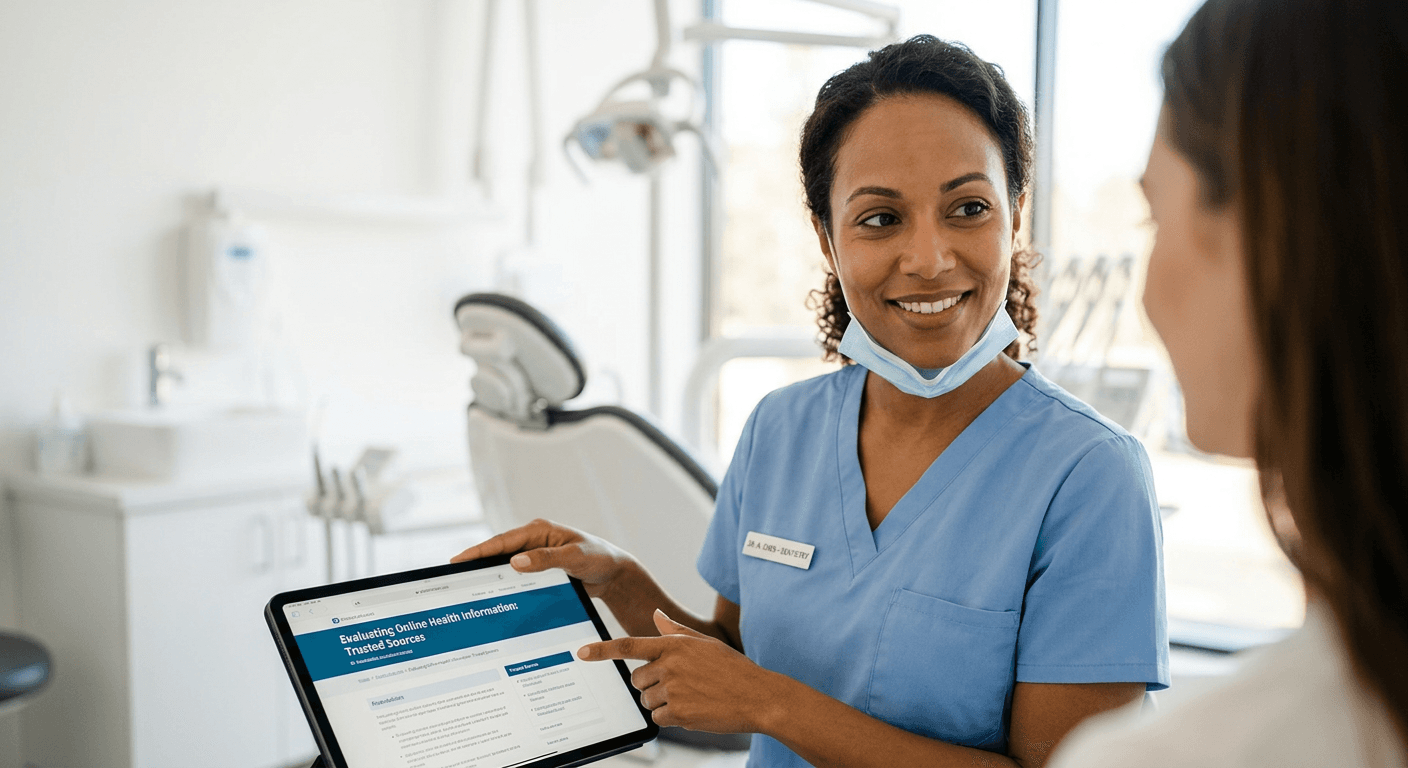
- Seek Out Professional Creators: To combat the rise of fake news, many licensed dentists are creating their own educational video content [4]. Dentists are using platforms like Instagram and TikTok to share clinic tours, discuss treatments, and debunk myths like charcoal brushing [4]. Looking for verified dental professionals online is a great way to access safe, reliable, and science-backed information [3].
- Consult Your Personal Dentist: The safest way to evaluate any dental trend is to ask your dentist during your next routine checkup [6]. They can provide personalized advice tailored to your specific oral health needs.
---
How to Respond to Misinformation Online
We all play a role in keeping the digital space safe. If you spot a friend, family member, or online community sharing harmful DIY dental advice, consider taking action to prevent its spread.
The British Association for the Study of Community Dentistry (BASCD) recommends correcting misinformation kindly but clearly, especially when you see it within your own social and digital networks [3]. Instead of engaging in hostile arguments, share reliable, science-backed resources from trusted dental authorities to help steer the conversation back to evidence-based health practices [3].
---
Conclusion
Your smile is an essential part of your overall health and well-being. While the internet offers a wealth of valuable dental hygiene tips, it also harbors dangerous myths that can permanently damage your teeth and gums. By learning how to critically evaluate online sources, recognize red flags, and rely on certified dental professionals, you can protect your oral health from harmful misinformation.
Protect your smile the right way. If you have questions about a dental trend you saw online, skip the comment section and ask a professional. Schedule an appointment with your dentist today to get personalized, evidence-based care for your teeth and gums.
---
Sources
[1] Exploring online oral health misinformation: a content ... — https://pubmed.ncbi.nlm.nih.gov/37255069/ [2] Exploring online oral health misinformation: a content ... — https://repositorio.usp.br/directbitstream/7488369c-5c36-46ab-8457-60a177b6fd51/3141030.pdf [3] Tackling Misinformation in Population Oral Health — https://www.bascd.org/about/news/tackling-misinformation-in-population-oral-health-the-role-of-bascd-in-promoting-evidence-based-practice [4] Word of Mouth | Faculty of Dentistry, University of Toronto — https://www.dentistry.utoronto.ca/news/word-mouth [5] Online oral health misinformation and information quality (23 Jul 2026) — https://www.semanticscholar.org/paper/Online-oral-health-misinformation-and-information-a-Oddy-Holden/c08bfe03081613ab52c10eb470e04ec5e81f802c [6] Understanding the Importance of a Careful Approach to ... (29 May 2025) — https://gilmoredental.com/understanding-the-importance-of-a-careful-approach-to-dental-related-internet-information/ [7] Online Dental Misinformation S6E08 (5 Aug 2025) — https://www.ada.org/publications/dental-sound-bites/season-6/online-dental-misinformation-s6e08 [8] Fake news and oral healthcare — https://www.dental-update.co.uk/content/guest-editorial/fake-news-and-oral-healthcare