
Fernunson Dental
How to Prevent Periodontal Disease Age Risks
Learn how to prevent periodontal disease age risks with our complete guide to senior gum health, daily hygiene tips, and expert dental care.
August 14, 2026
If you want to maintain a healthy smile for life, learning how to prevent periodontal disease age risks is one of the most important steps you can take. While many people associate aging with tooth loss, the reality is that tooth loss is not an inevitable part of growing older [4]. Instead, it is often the result of periodontal (gum) disease, a chronic inflammatory condition that becomes increasingly common over time.
In fact, research shows that more than 70% of adults aged 65 and older have some form of periodontal disease [4]. Fortunately, with the right combination of daily oral hygiene habits, professional dental care, and lifestyle adjustments, this condition is highly preventable [4]. Here is what you need to know to protect your gums and keep your smile strong as you age.
---
Understanding the Aging Mouth and Gum Disease
Periodontal disease is an infection of the structures that surround and support your teeth [4]. This includes your gums, periodontal ligaments, cementum (the thin layer of bony material connecting the teeth to the jaw), and the alveolar bone that contains your tooth sockets [4].
The disease typically progresses through three distinct stages [4]:
- Gingivitis: The earliest, most common, and least severe stage, characterized by mild gum inflammation [4].
- Periodontitis: An advanced stage where the gums begin to pull away from the teeth, forming pockets that harbor bacteria.
- Advanced Periodontitis: The most severe stage, where the supporting bone and fibers are destroyed, often leading to loose teeth or tooth loss.
Because gum disease is usually painless in its early stages, many people do not realize they have it until it reaches an advanced phase [4]. However, you can protect yourself by watching for key symptoms, such as red, swollen, or tender gums [4], bleeding during brushing or flossing, persistent bad breath, or receding gums. Additionally, biological changes associated with aging and frailty can alter how your body responds to bacterial plaque, making older adults more susceptible to systemic inflammation and tissue breakdown [3].
---
Professional Tips to Prevent Periodontal Disease Age Risks
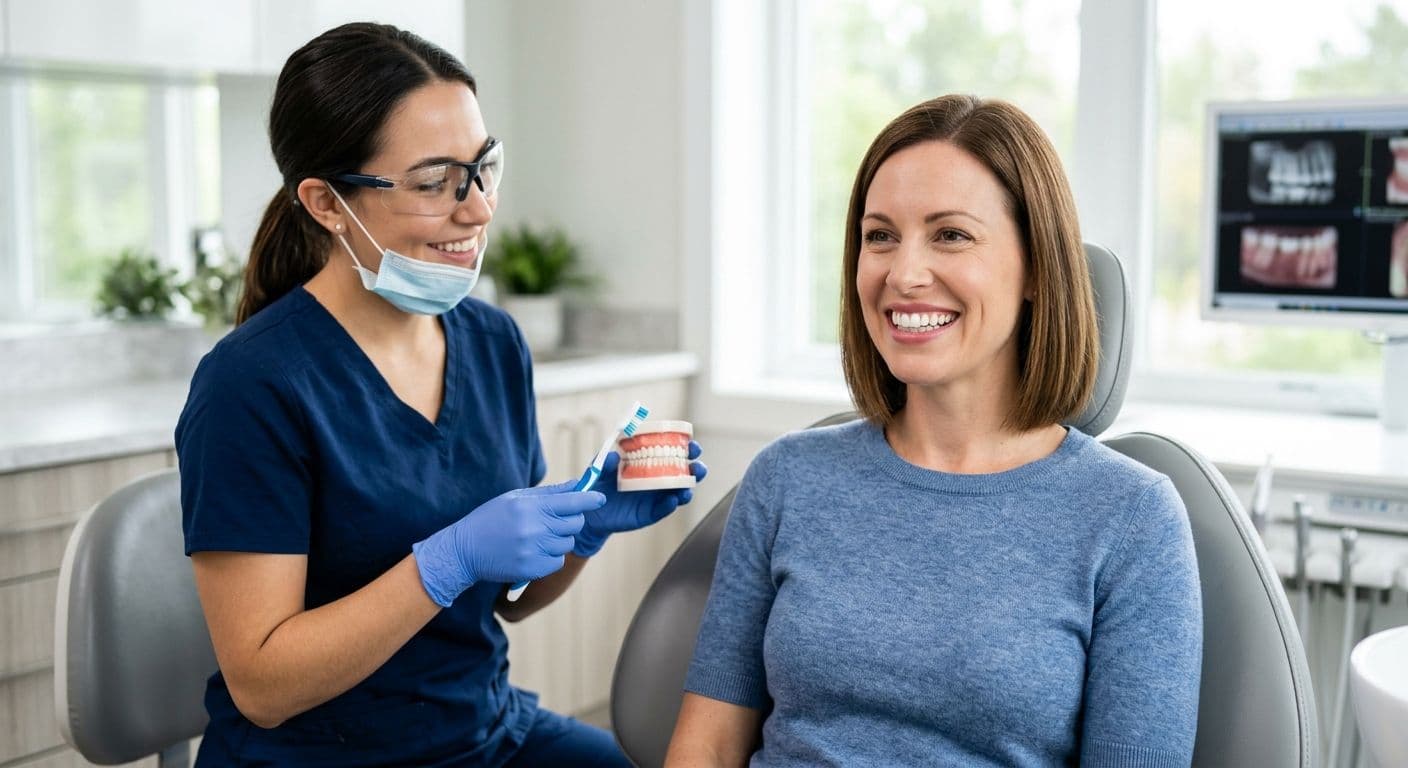
Maintaining a rigorous daily hygiene routine is your first line of defense against plaque, the sticky film of bacteria that constantly forms on your teeth [6]. To protect your gum tissue and prevent periodontal disease as you age, focus on these essential habits:
- Brush Twice a Day: Clean your teeth thoroughly at least twice daily using a fluoride toothpaste to keep plaque at bay [5][8].
- Avoid Aggressive Brushing: As you age, your gums naturally recede, exposing the sensitive roots of your teeth. Avoid aggressive brushing with hard bristles, which can wear down enamel and irritate gum tissue [5]. Instead, use a soft-bristled toothbrush or an electric toothbrush.
- Floss Daily: Flossing is vital to remove plaque and food debris from tight spaces where toothbrush bristles cannot reach [6][8].
- Adapt Your Tools: If physical limitations such as arthritis or cognitive decline make traditional flossing challenging, do not skip this step [1][2]. Call your dentist to ask about simpler flossing options, such as water flossers, dental picks, or interdental brushes [2].
Just as you secure your personal accounts through a reliable LOGIN OASIS, you must protect your oral health with a secure, daily preventive routine that guards against bacterial buildup.
---
Combatting Dry Mouth and Medication Side Effects
One of the most significant risk factors for gum disease in older adults is dry mouth (xerostomia). While dry mouth is not a natural consequence of aging itself, it is a frequent side effect of hundreds of prescription and over-the-counter medications commonly taken by seniors, including drugs for high blood pressure, depression, and bladder control [1].
Saliva plays a crucial role in oral health by washing away food particles, neutralizing harmful acids, and limiting bacterial growth. When saliva production drops, plaque accumulates much faster, increasing your risk of infection.
To combat dry mouth, try the following strategies:
- Stay Well-Hydrated: Drink plenty of water throughout the day to keep your mouth moist [1][5].
- Stimulate Saliva Flow: Chew sugar-free gum or use sugar-free lozenges to encourage saliva production [5].
- Avoid Irritants: Limit caffeine, alcohol, and tobacco, which can dry out your oral tissues.
- Consult Your Dentist: Ask your dentist about specialized moisturizing mouthwashes, gels, or prescription saliva substitutes.
---
The Crucial Role of Regular Dental Visits
Even the most diligent brushing and flossing routines cannot remove all plaque. Over time, plaque that is left on the teeth can harden into tartar (calculus), which can only be removed by a dental professional [7].
Visiting your dentist regularly is essential for early detection and professional cleaning [2][6]. If your dentist detects signs of gum inflammation, they can intervene early. Fortunately, periodontal disease is treatable at any age [7]. For mild cases, a professional cleaning and improved home care may reverse the damage. For more advanced cases, dentists use a deep cleaning procedure called scaling and root planing to remove hardened plaque and infected gum tissue from below the gumline [7].
---
Lifestyle Adjustments for Better Gum Health
In addition to daily hygiene and professional checkups, overall lifestyle habits play a major role in your body's ability to fight off oral infections.
Manage Systemic Conditions
Conditions like diabetes, cardiovascular disease, and osteoporosis are closely linked to periodontal health. Managing these chronic conditions through proper medical care can help reduce systemic inflammation, making it easier to maintain healthy gums [3].
Manage Stress
Chronic stress raises cortisol levels, which can impair your immune system and worsen inflammatory conditions like gum disease [3]. Taking time to unwind, whether by reading, exercising, or enjoying a quick game on a SLOT ONLINE TERPERCAYA, can help lower your cortisol levels and protect your gums.
---
Conclusion
Preventing gum disease is a lifelong commitment, but it is entirely achievable. By understanding how aging affects your mouth, staying hydrated, adapting your brushing and flossing techniques, and scheduling regular dental visits, you can keep your teeth and gums healthy for decades to come.
Do not wait for pain or bleeding to take action. Schedule an appointment with your dentist today to discuss a personalized preventive care plan tailored to your unique needs.
---
Sources
[1] 5 Tips to Avoid Gum Disease as You Age — https://www.aarp.org/health/conditions-treatments/gum-disease/ [2] How to Prevent Periodontal Disease as You Age — https://www.dentalone-ga.com/blog/how-to-prevent-periodontal-disease-as-you-age [3] Frailty, Aging, and Periodontal Disease: Basic Biological Considerations - PMC — https://pmc.ncbi.nlm.nih.gov/articles/PMC8771712/ [4] Aging Adults and the effect of Periodontal Disease: It can be prevented — https://visityourdentist.org/research/aging-adults-and-the-effect-of-periodontal-disease-it-can-be-prevented [5] How to Maintain Healthy Gums as You Age — https://4thstreetfamilydentistry.com/2025/06/how-to-maintain-healthy-gums-as-you-age/ [6] About Periodontal (Gum) Disease | Oral Health — https://www.cdc.gov/oral-health/about/gum-periodontal-disease.html [7] The aging mouth - and how to keep it younger — https://www.health.harvard.edu/diseases-and-conditions/the-aging-mouth-and-how-to-keep-it-younger [8] Periodontal Care for Seniors: Tips for Maintaining Gum Health with Age — https://dentistinmankatomn.com/periodontal-care-for-seniors-tips-for-maintaining-gum-health-with-age/