
Fernunson Dental
How Regular Dental Rays Protect Smile and Health
Learn how regular dental rays protect smile health by identifying hidden cavities and infections early. Read our guide on dental X-ray safety.
August 15, 2026
It is often said that prevention is the best medicine, and when it comes to oral health, regular dental rays protect smile longevity in ways the naked eye simply cannot. While daily brushing and flossing are the cornerstones of a great hygiene routine, they only clean the surfaces you can see.
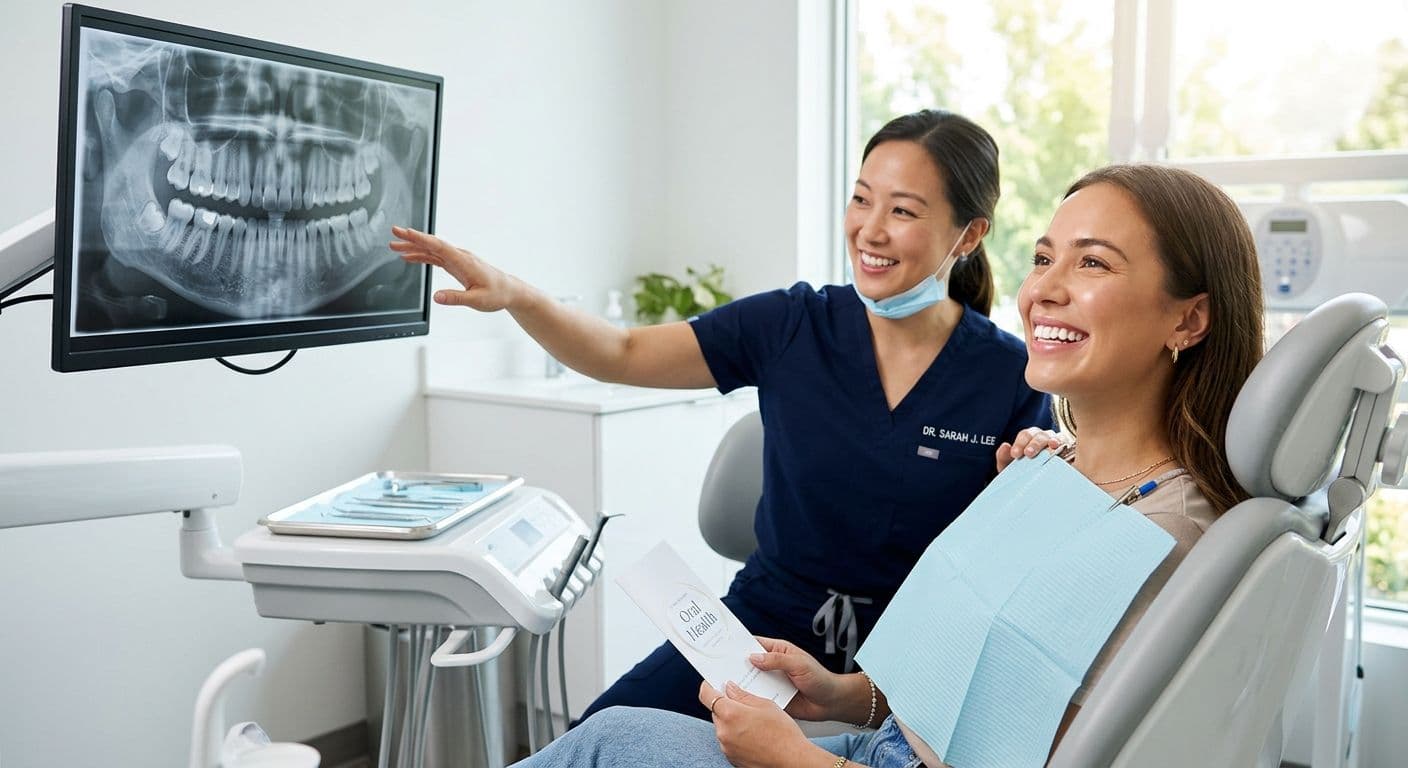
During a routine dental checkup, your dentist uses specialized diagnostic tools to evaluate what is happening beneath the surface [2][3]. Dental X-rays (also known as radiographs) serve as an invaluable preventive tool, allowing dental professionals to identify, diagnose, and treat oral conditions before they progress into painful, costly emergencies [2][8].
---
What Lies Beneath: Why We Need Dental X-Rays
Even if your teeth look perfectly white and feel completely fine, many dental issues can hide silently beneath the surface [3]. A visual examination with dental instruments is highly useful, but it cannot reveal what is happening inside the tooth structure or below the gumline [2][3].
Dental X-rays act like a "secret map" for your oral health [3]. They provide your dentist with a comprehensive view of your teeth, roots, and jawbone, which is essential for identifying hidden abnormalities [6]. Specifically, X-rays enable dentists to:
- Detect hidden decay: Cavities frequently start in the tight spaces between teeth or directly underneath existing fillings where visual tools cannot reach [3][5].
- Identify infections: Deep infections, such as abscesses at the root tip, can develop without immediate outward symptoms [3][7].
- Monitor bone health: X-rays show the health of the bone supporting your teeth, making it easy to spot early signs of bone loss [5][7].
- Evaluate tooth development: Dentists use images to monitor the growth of permanent teeth in children and evaluate the positioning of wisdom teeth in teens and adults [5].
---
Why Regular Dental Rays Protect Smile and Jaw Health
When it comes to maintaining a strong, functional bite, preventive diagnostics are irreplaceable. Utilizing regular dental rays protect smile structures by catching destructive oral diseases in their infancy [1][8].
For instance, periodontal (gum) disease is a leading cause of tooth loss in adults. In its early stages, gum disease may only cause mild redness or bleeding. However, as it progresses, it destroys the underlying bone that holds your teeth in place [2]. By the time a tooth becomes loose, significant damage has already occurred. Regular radiographs allow dentists to detect early bone loss and intervene with targeted periodontal therapies before your smile's foundation is compromised [2][5][7].
Additionally, catching decay early prevents the need for invasive treatments like root canals or extractions [8]. When scheduling your next preventive visit, finding a reliable appointment SLOT TERPERCAYA at your local clinic is the first step toward long-term oral health.
---
Common Types of Dental X-Rays and Their Uses
Dentists use different types of radiographs depending on your specific clinical needs. These are generally divided into intraoral X-rays (where the film or sensor is placed inside the mouth) and extraoral X-rays (where the imaging machine remains outside the mouth) [2].
Bitewing X-Rays
This is the most common type of intraoral radiograph taken during routine checkups [2]. To take a bitewing, you bite down on a small tab or wing-shaped sensor [2]. These images show the crowns of both your upper and lower teeth in a specific area of your mouth, as well as the height of the neighboring supporting bone [2]. They are highly effective at revealing decay between teeth and early signs of bone loss due to gum disease [2].
Periapical (PA) X-Rays
Unlike bitewings, which show a limited view of both arches, a periapical X-ray focuses on one or two entire teeth from the crown all the way to the end of the root where it anchors into the jawbone [2][6]. These are crucial for diagnosing root infections, deep cysts, or abscesses [3][7].
Panoramic X-Rays
Panoramic X-rays are extraoral images that capture your entire mouth in a single, broad image. This includes all of your upper and lower teeth, the jaw joints, and the nasal cavity. They are highly useful for planning orthodontic treatments, evaluating wisdom teeth, and checking the jaw for cysts or tumors [5][7].
---
Addressing the Safety of Dental X-Rays
"Are dental X-rays safe?" is one of the most common questions patients ask their dental teams [5]. It is completely natural to be mindful of radiation exposure, but modern dental technology has made the process exceptionally safe [3][4].
`` Average Radiation Exposure Comparison: ┌─────────────────────────┬─────────────────────────┐ │ Source of Radiation │ Approximate Dose │ ├─────────────────────────┼─────────────────────────┘ │ Daily Background │ ~10 microsieverts (per day) │ Digital Dental X-ray │ Extremely low / negligible └─────────────────────────┴─────────────────────────┘ ``
When used appropriately, dental X-rays serve as a highly reliable ally in keeping your teeth and gums strong [4]. Today’s digital dental X-rays use up to 80% less radiation than traditional paper-film X-rays of the past. Furthermore, dental offices utilize protective lead aprons and thyroid collars to shield the rest of your body from scattered radiation.
Securing a highly coveted morning SLOT GACOR for your routine checkup ensures you get your imaging done without disrupting your work day. Ultimately, the diagnostic benefits of catching a progressive infection or severe decay early far outweigh the negligible risk of modern dental radiation.
---
How Often Do You Actually Need Dental X-Rays?
There is no one-size-fits-all schedule for dental radiographs. The frequency with which you need them depends entirely on your age, your current oral health status, and your risk factors for dental disease [2].
- High-Risk Patients: If you have a history of frequent cavities, active gum disease, dry mouth, or existing extensive dental work (like crowns and bridges), your dentist may recommend X-rays every 6 to 12 months [2][3][8].
- Low-Risk Patients: Adults who maintain excellent oral hygiene, have healthy gums, and rarely get cavities may only require routine bitewing X-rays once every 18 to 24 months [2].
- New Patients: If you are visiting a new dental practice, your dentist will likely recommend a baseline set of X-rays to establish a clear picture of your current oral health and compare future changes [2].
By tailoring the frequency of your radiographs to your unique health profile, your dentist ensures you receive the maximum preventive benefit with minimal exposure [2][4].
---
Conclusion
A healthy, radiant smile is built on a foundation of proactive, preventive care. While daily brushing and flossing keep surface plaque at bay, regular dental X-rays provide the deeper insights necessary to protect your teeth, roots, and jawbone from silent issues [3][6].
Don't wait for a toothache to signal that something is wrong. By scheduling regular dental exams and keeping up with recommended diagnostic imaging, you can stop oral health issues in their tracks and preserve your beautiful smile for years to come [8]. Reach out to your local dental provider today to book your next checkup and preventive cleaning.
---
Sources
[1] Harbor Pointe Dental of Petoskey — https://www.facebook.com/harborpointedental/posts/dental-x-rays-are-a-key-part-of-protecting-your-smile-they-allow-us-to-see-whats/1650555420413574/ [2] Delta Dental: Dental X-rays: Key Things to Know — https://www.deltadental.com/protect-my-smile/procedures/x-rays/ [3] Northern Dental: Dental X-ray: Types, Safety, and Why Your Dentist Might Recommend One — https://northerndental.net.au/dental-x-ray-types-safety-and-why-your-dentist-might-recommend-one/ [4] Jennings DDS: Understanding the Importance of Dental X-Rays for Your Health — https://drjenningsdds.com/2025/01/importance-dental-x-rays-health/ [5] Dr. Karen Lai (Dentist Instagram Reel): "Are dental X-rays safe?" — https://www.instagram.com/reel/DQE2o9NCByS/?hl=en [6] Mississauga Dentistry: 6 Reasons Why Dental X-Rays Can Keep Your Smile Healthy — https://www.mississaugadentistry.com/blog/1027086-6-reasons-why-dental-x-rays-can-keep-your-smile-healthy [7] Cleveland Clinic: Dental X-rays: Purpose & Types — https://my.clevelandclinic.org/health/diagnostics/11199-dental-x-rays [8] MetLife: Dental X-rays: What to Know Before You Get Them — https://www.metlife.com/oralfitnesslibrary/dental-treatments/dental-x-rays-what-to-know-before-you-get-them/