
Fernunson Dental
How Peptide Therapy for Teeth Could Revolutionize Cavity Prevention by 2027
Discover how peptide therapy for teeth could transform cavity prevention by 2027. Learn about the science behind peptide treatment for cavities and its potential for oral health.
November 27, 2026
Imagine a future where preventing tooth decay doesn’t rely solely on brushing, flossing, and fluoride treatments. Enter peptide therapy for teeth, a groundbreaking approach that could redefine cavity prevention. By 2027, this innovative treatment may offer a noninvasive, effective way to combat tooth decay and strengthen enamel. Let’s dive into how peptides work, their potential benefits, and what this means for your oral health routine.
What Is Peptide Therapy for Teeth?
Peptides are small chains of amino acids that act as building blocks for proteins. In dentistry, peptide treatment for cavities involves using lab-made peptides to mimic the natural proteins in your mouth that protect teeth and gums. These peptides can help rebuild enamel, fight harmful bacteria, and prevent plaque buildup [2].
For example, bioactive peptides can coat tooth surfaces, forming a protective barrier against acid attacks and bacterial adhesion [5]. This approach could revolutionize how we prevent tooth decay with peptides, offering a more natural and proactive solution.
How Peptides Could Prevent Cavities
1. Enamel Regeneration
One of the most exciting aspects of peptide-based cavity prevention is its ability to regenerate enamel. Peptides like those found in Curadont can attract calcium and phosphate ions to damaged areas, helping rebuild a stronger mineral layer [4]. This process mimics natural enamel repair, potentially reversing early decay without invasive procedures.
2. Bacterial Control
Peptides also have antimicrobial properties, making them effective at targeting harmful bacteria in the mouth. For instance, plant-made peptides can reduce bacterial adhesion to teeth and gums, offering a natural way to control plaque [6].
3. Acid Resistance
Smart peptide materials can self-assemble into hydrogels that adhere to teeth, disrupting biofilms and resisting acid attacks [7]. This dual action not only prevents cavities but also strengthens teeth against future decay.
The Future of Peptide-Based Dental Treatments
By 2027, new peptide dental treatment options could become widely available. Researchers are already exploring how peptides can be integrated into toothpaste, mouthwashes, and even dental gels [1]. These products could complement traditional oral hygiene practices, offering an extra layer of protection.
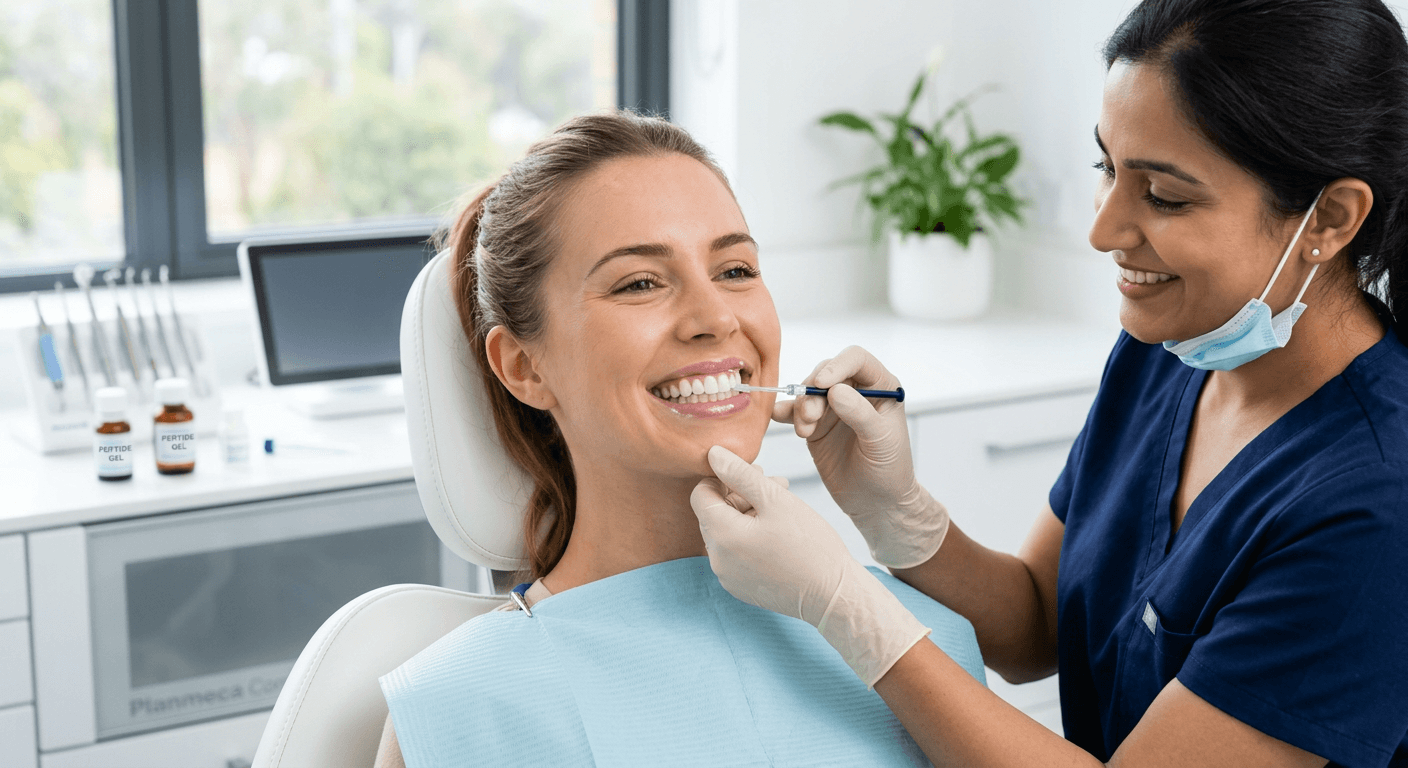
For example, a peptide-infused toothpaste could help prevent tooth decay with peptides while you brush, making cavity prevention easier than ever. Additionally, dental professionals may use peptide treatments during routine check-ups to strengthen enamel and repair early damage [3].
What This Means for Your Oral Health Routine
While peptide therapy for teeth shows immense promise, it’s important to remember that research is still ongoing. For now, brushing twice a day with fluoride toothpaste, flossing daily, and visiting your dentist regularly remain the best ways to maintain oral health [2].
However, as peptide-based products become available, they could enhance your daily routine. Imagine combining traditional methods with smart peptide materials for teeth—this dual approach could significantly reduce your risk of cavities and gum disease.
Conclusion: Stay Informed and Proactive
The rise of peptide therapy for teeth represents a thrilling advancement in preventive dentistry. By 2027, this innovative treatment could offer a noninvasive, effective way to protect your smile. Stay informed about emerging dental technologies, and consult your dentist about incorporating peptide-based products into your routine when they become available.
Ready to take the next step in oral health? Schedule a check-up today and ask your dentist about the latest advancements in cavity prevention. Your smile deserves the best care possible!
Sources
[1] New data suggests smart peptide-based materials may be an effective way to treat and prevent caries — https://www.dentistryiq.com/dentistry/research-and-news/article/55413851/new-data-suggests-smart-peptide-based-materials-may-be-an-effective-way-to-treat-and-prevent-cares [2] What Peptides Could Mean for the Future of Oral Health — https://blog.deltadentalco.com/2026/09/peptides-oral-health-care/ [3] Smart peptide-based materials and their clinical application for caries management — https://pubmed.ncbi.nlm.nih.gov/42833737/ [4] Stop Cavities Without Drilling: How Peptide Technology (Curadont) Repairs Early Decay — https://oceandentistryco.com/can-curadont-stop-cavities-without-drilling/ [5] peptides for cavities Phosphoserine — https://lcsr.rutgers.edu/peptides-for-cavities-royal/ [6] are there any peptides for teeth peptides that are made from amelogenin — https://cetaf.org/are-there-any-peptides-for-teeth-omega/ [7] Optimization strategies for antimicrobial peptides in dental caries prevention and management — https://www.frontiersin.org/journals/microbiology/articles/10.3389/fmicb.2026.1899522/full [8] Researchers are pushing “regenerative dentistry” forward by using proteins and peptides — https://www.facebook.com/thesciencepulse/posts/researchers-are-pushing-regenerative-dentistry-forward-by-using-proteins-and-pep/1364432612394437/