
Fernunson Dental
A Comprehensive Guide Restorative Dentistry for Patients
Read our complete guide restorative dental treatments, including CEREC same-day crowns, and discover how to rebuild a strong, healthy smile.
August 22, 2026
In this comprehensive guide restorative dentistry is demystified so you can make informed decisions about your oral health. Whether you are dealing with a minor cavity or require a full-smile reconstruction, understanding your options is the first step toward a healthier life. Modern dental technology makes it easier than ever to rebuild damaged teeth, restore oral function, and regain your confidence.
---
What is Restorative Dentistry?
The word "restorative" implies bringing something back to its optimal state. In educational and social contexts, restorative practices focus on proactive relationship-building and repairing harm within communities [1][7]. These frameworks help establish positive climates and resolve conflicts constructively [2][3]. Similarly, school and institutional implementation guides provide step-by-step toolkits to foster long-term growth and healing [4][5][6].
In the dental field, restorative care operates on a similar philosophy of healing and preservation. Rather than simply extracting damaged teeth, restorative dentistry focuses on preserving your natural teeth, restoring their physical function, and protecting your overall oral health [8].
Restorative dentistry encompasses a range of treatments designed to repair or replace damaged, decayed, or missing teeth. By addressing these issues, dentists can prevent further decay, stop teeth from shifting, and ease pain caused by structural damage.
---
Common Types of Tooth Restorations
According to clinical practice guidelines from the American Dental Association (ADA), restorative treatments for caries lesions (cavities) are carefully tailored based on the extent of the decay and whether they are for primary or permanent teeth [8]. The ADA guidelines recommend specific direct restorative materials and precise caries removal approaches to maximize the lifespan of your teeth [8].
Depending on your specific needs, your dentist may recommend one of several common restorations:
1. Dental Fillings
For minor decay, dental fillings are the standard treatment. The dentist removes the decayed portion of the tooth and fills the space with a durable material, such as composite resin, porcelain, or dental amalgam [8].
2. Dental Crowns
When a tooth is cracked, severely decayed, or weakened by a root canal, a crown (or cap) is used to cover the entire visible portion of the tooth. Crowns restore the tooth’s shape, size, strength, and appearance.
3. Dental Bridges and Implants
If you are missing one or more teeth, bridges or dental implants are excellent solutions:
- Bridges: These consist of artificial teeth anchored by crowns on the adjacent natural teeth.
- Implants: These are biocompatible titanium posts surgically inserted into the jawbone, acting as artificial tooth roots to support a custom crown.
---
The Modern Solution: CEREC and Same-Day Restorations
Historically, getting a dental crown required at least two visits, messy physical impressions, and wearing an uncomfortable temporary restoration. Waiting for your custom crown to return from an off-site laboratory used to require weeks of patience, making the final delivery feel like a suspenseful LIVE DRAW SDY LOTTO event.
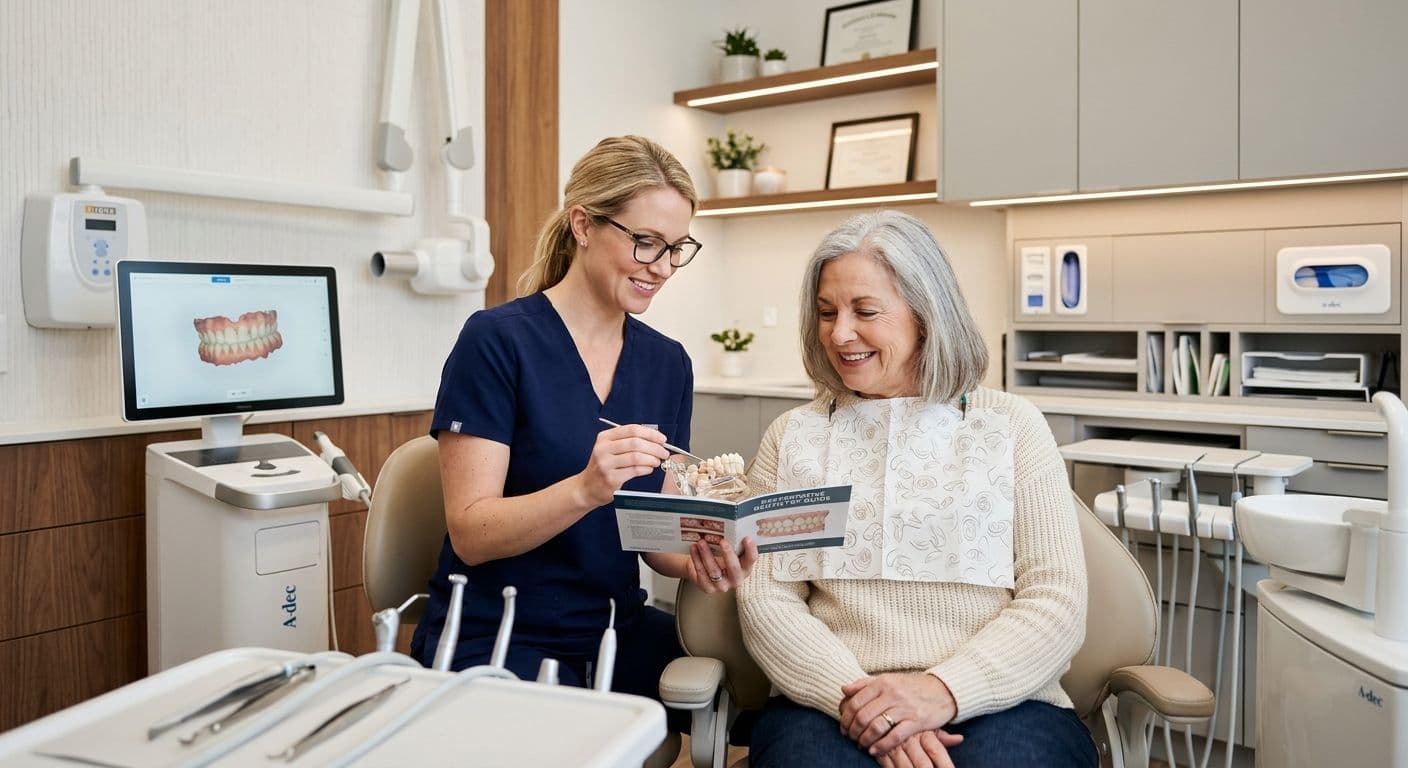
Fortunately, modern dental technology has completely revolutionized this experience. With CEREC (Chairside Economical Restoration of Esthetic Ceramics), dentists can design, mill, and place high-quality ceramic crowns, inlays, and onlays in a single appointment.
Using advanced 3D imaging software, your dentist takes a digital scan of your mouth. This scan is sent to an in-office milling machine that carves your custom-fit restoration from a solid block of high-grade ceramic in minutes. The result is a highly durable, natural-looking restoration completed in just one visit.
---
A Step-by-Step Guide Restorative Treatment Process
Understanding what to expect during your appointment can significantly reduce dental anxiety. Here is the typical step-by-step process for standard restorative treatments:
- Initial Assessment and Diagnostics: Your dentist will perform a visual examination and take digital X-rays to assess the health of your tooth roots and surrounding bone structure.
- Preparation: The dentist will numb the area with a local anesthetic to ensure you remain completely comfortable. They will then remove the decayed or damaged portion of the tooth.
- Impression and Design: For traditional restorations, a physical mold is taken. For CEREC restorations, a quick digital scan is performed.
- Fabrication and Placement: Once the restoration is ready, your dentist will check its fit and color match. After making any necessary minor adjustments, they will permanently bond the restoration to your tooth and polish it to a natural shine.
---
Why Restorative Care Matters for Your Long-Term Health
Investing in your oral health is one of the best decisions you can make for your systemic well-being. Finding the right dentist who offers state-of-the-art restorative care shouldn't feel like playing a game of chance or hoping to hit a SLOT GACOR; instead, it should be a reliable, evidence-based process that guarantees long-term health.
Leaving cavities or broken teeth untreated can lead to severe infections, chronic pain, and eventual tooth loss. Furthermore, missing teeth can cause your remaining teeth to shift out of alignment, leading to bite issues, jaw joint pain (TMJ), and difficulty chewing. By addressing dental issues early with high-quality restorations, you preserve your natural smile, protect your jawbone structure, and avoid more complex and costly treatments down the road.
---
Conclusion
Restorative dentistry is about more than just fixing teeth—it is about restoring your quality of life, your confidence, and your overall health. From simple fillings to state-of-the-art same-day CEREC crowns, modern dentistry offers comfortable, efficient, and highly aesthetic solutions for every patient.
If you have been delaying dental treatment or are experiencing tooth pain, do not wait for the problem to worsen. Contact your dental provider today to schedule a consultation and take the first step toward a healthy, fully restored smile.
---
Sources
[1] Restorative Practices: A Guide for Educators — https://schottfoundation.org/restorative-practices/ [2] Restorative Practice Guidance - 2025 — https://restorativejustice.org.uk/resources/restorative-practice-guidance-2025 [3] Handbook of Restorative Justice - Google Book — https://books.google.co.id/books?id=U2UQBAAAQBAJ&printsec=copyright [4] Restorative Practices School Implementation Guidance - MDE — https://education.mn.gov/mdeprod/idcplg?IdcService=GET_FILE&dDocName=MDE089351&RevisionSelectionMethod=latestReleased&Rendition=primary [5] Resource Guide for Restorative Practices - Offices — https://offices.vassar.edu/restorative-practices/resource-guide/ [6] Restorative Justice Guidelines Toolkit — https://www.nacrj.org/best-practices-toolkit/ [7] The Ultimate Guide to Restorative Practice in Classrooms (9 Jul 2025) — https://greenhouselearning.co.uk/the-ultimate-guide-to-restorative-practice-in-classrooms/ [8] Restorative Treatments for Caries Lesions Clinical Practice Guideline — https://www.ada.org/resources/research/science/evidence-based-dental-research/caries-management-clinical-practice-guidelines/evidence-based-clinical-practice-guideline-on-restorative-treatments-for-caries-lesions